

Someone searching for “idiomas” hoping to find English expressions like “break the ice” often ends up confused. That’s because idiomas doesn’t mean what many English speakers assume it means.
If you’ve come across this word while studying Spanish, Portuguese, or another Romance language, you might be wondering why it doesn’t match the English concept of colorful expressions and figurative phrases.
This confusion is common, especially for students switching between multiple languages at once. Words that look almost identical across languages don’t always carry the same meaning, and idiomas is a clear example of this pattern.
Understanding what idiomas actually means, and how it connects to the English word “idiom,” clears up a surprising amount of confusion for language learners, travelers, and anyone curious about how languages influence each other.
By the end of this piece, you’ll know exactly what idiomas means, how it’s used correctly, and why it shouldn’t be confused with English idioms.
What Does Idiomas Mean?
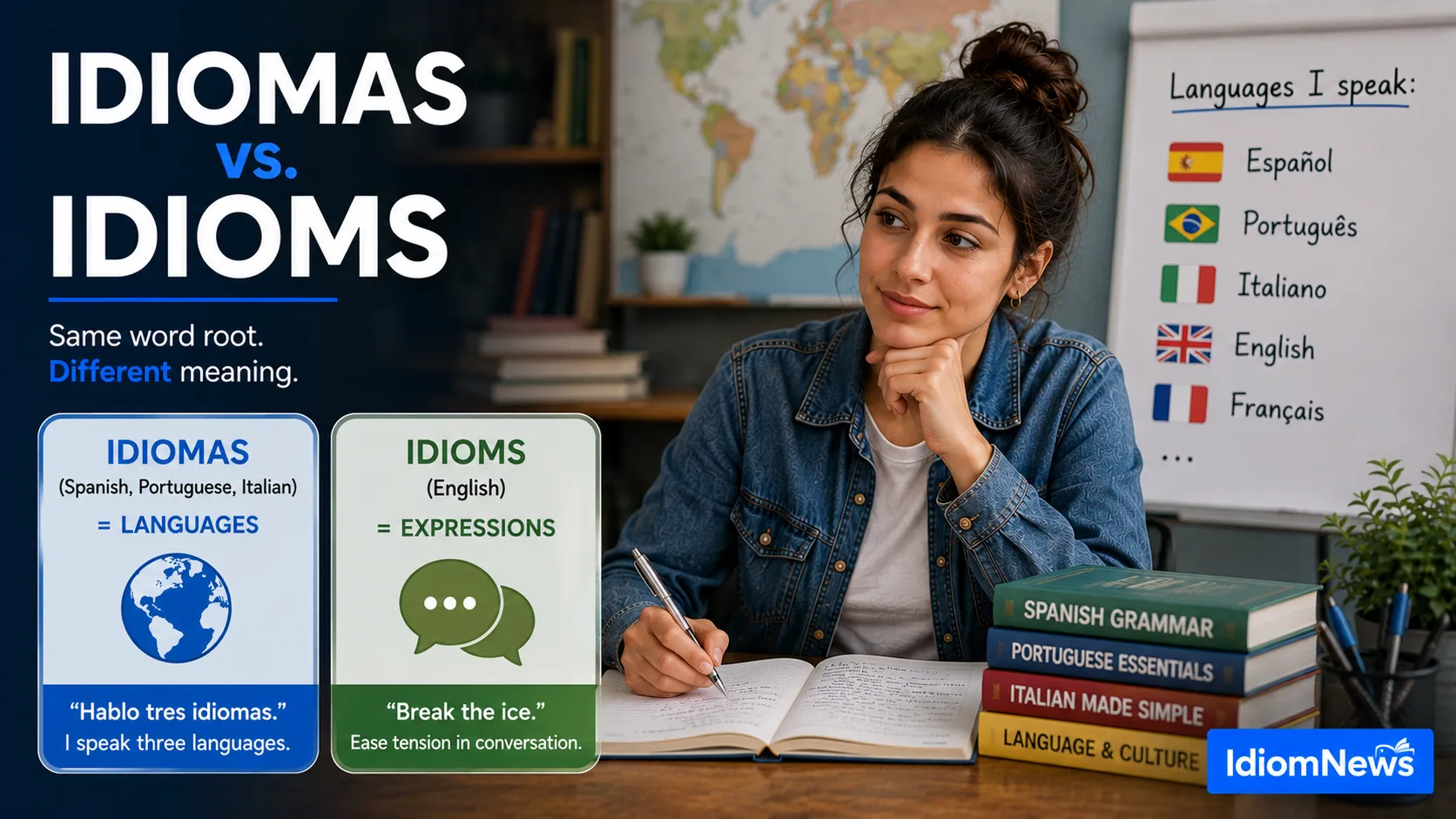
Idiomas is the plural form of “idioma,” a word used in Spanish, Portuguese, and Italian meaning “languages.” It refers to multiple language systems, such as Spanish, English, and French, rather than figurative expressions. This differs from the English word “idioms,” which describes specific phrases whose meaning isn’t obvious from the individual words.

Why Idiomas Gets Confused With English Idioms
The mix-up happens because idiomas and idioms share the same Latin root. That root originally referred to a particular way of speaking or a distinct form of language.
English eventually shifted this word toward figurative expressions, while Spanish, Portuguese, and Italian kept the meaning closer to “languages” themselves.
This kind of divergence is common across related languages. Words that once meant the same thing can drift apart significantly after centuries of separate use.
Recognizing this shared origin makes the confusion easier to understand, rather than feeling like a random coincidence.
How Idiomas Is Used in Real Sentences
In Spanish, someone might say, “Hablo tres idiomas,” which means “I speak three languages.” The word simply counts or refers to multiple languages.
Portuguese follows the same pattern. “Quantos idiomas você fala?” translates to “How many languages do you speak?”
Italian uses idiomas similarly, often in academic or formal contexts, referring to distinct languages or, occasionally, regional linguistic varieties.
None of these examples involve figurative phrases. This is the key difference that trips up English speakers encountering the word for the first time.
[Internal Link: Related Article] covering the difference between idiom and idiomatic expressions can help readers who want to understand the English side of this comparison in more depth.
Why This Distinction Matters for Language Learners
Learners studying Spanish, Portuguese, or Italian sometimes carry assumptions from English into their new language. Seeing the word idiomas can trigger thoughts of expressions and phrases, even though the actual meaning refers to languages as a whole.
This confusion rarely leads to serious misunderstandings, since surrounding context usually makes the intended meaning clear fairly quickly.
Still, recognizing this pattern early helps learners build stronger instincts for how vocabulary shifts across related languages, rather than assuming similar-looking words always match.
Expert Insights: Why These Word Mix-Ups Are Common Between Languages
Words like idiomas and idioms are known as false friends, meaning they look similar across languages but carry different meanings. This is one of the most frequent sources of confusion for learners studying Spanish, Portuguese, or Italian while already speaking English fluently.
This happens because learners naturally rely on pattern recognition from their first language to guess unfamiliar words in a new one. Most of the time, this shortcut works well. Occasionally, as with idiomas, it leads directly to confusion.
Recognizing false friends early prevents small misunderstandings from compounding into larger comprehension gaps, particularly during reading or listening practice where context clues may be limited.
Building awareness of common false friends is considered a practical skill for intermediate learners working across English and Romance languages.
Common Mistakes People Make With Idiomas and Idioms
Mistake 1: Assuming idiomas means figurative expressions
This is the most frequent mix-up. Idiomas refers to languages, while idioms refer to figurative phrases. The two words serve entirely different purposes.
Mistake 2: Searching for English idioms using the word idiomas
Many learners accidentally search using the Spanish or Portuguese word, leading to irrelevant results focused on languages rather than expressions.
Mistake 3: Assuming this mix-up only affects beginners
Even intermediate learners occasionally slip into this confusion, especially when switching quickly between multiple languages during conversation.
Mistake 4: Ignoring context clues
The surrounding sentence almost always clarifies meaning. Paying attention to context prevents unnecessary confusion in both reading and conversation.
Practical Steps to Use Idiomas Correctly
- Remember the core meaning: idiomas means languages, not expressions.
- Notice which language you’re reading or speaking, since this usually resolves any confusion immediately.
- Learn the correct word for idiom in your target language, since it differs from idiomas entirely.
- Use context clues to confirm meaning quickly when unsure.
- Practice idiomas in full sentences, such as counting languages you speak, to reinforce correct usage.
- Review a few other false friends between English and Romance languages to strengthen overall awareness.
Idiomas vs. Idioms at a Glance
| Word | Language | Meaning | Example |
|---|---|---|---|
| Idiomas | Spanish, Portuguese, Italian | Languages (plural) | “Hablo tres idiomas.” |
| Idioms | English | Figurative expressions | “Spill the beans,” “break the ice” |
This table offers a quick reference whenever these two words start to blur together.
Frequently Asked Questions
Q: What does idiomas mean in English?
A: Idiomas translates to “languages” in English. It’s the plural form used in Spanish, Portuguese, and Italian to refer to multiple language systems, not figurative expressions.
Q: Is idiomas the same as idioms?
A: No. Idiomas means “languages,” while idioms refers to fixed expressions whose meaning differs from their individual words. The two words look similar but serve completely different purposes.
Q: How do I say “idioms” correctly in Spanish?
A: The Spanish term is usually “modismos” or “expresiones idiomáticas,” not “idiomas.” This distinction matters for anyone specifically searching for figurative expressions.
Q: Why do idiomas and idioms look so similar?
A: Both words share the same Latin root, which originally referred to a distinct way of speaking. English shifted toward figurative meaning over time, while Spanish, Portuguese, and Italian kept the meaning closer to “languages.”
Q: Are there other similar false friends in Spanish?
A: Yes. Words like “embarazada,” meaning pregnant rather than embarrassed, follow the same pattern. Recognizing these false friends helps prevent common misunderstandings while learning related languages.
Q: Does idiomas ever refer to dialects?
A: In some contexts, particularly in Italian, idioma can refer to a specific regional variety of speech rather than a standard national language. Context usually clarifies which meaning applies.
Q: Why does this mix-up matter for learners?
A: Misunderstanding false friends like idiomas can slow down comprehension, especially for beginners. Recognizing the correct meaning early helps learners read and listen more accurately across multiple languages.
Bringing It All Together
Idiomas and idioms might share a common root, but they point toward very different ideas, one describing languages themselves, and the other describing figurative expressions within a language. Understanding this distinction removes a common source of confusion for learners working across English, Spanish, Portuguese, and Italian.
False friends like this one are a normal part of learning related languages, not a sign of doing something wrong. Recognizing the pattern early makes future mix-ups far easier to catch.
Instead of assuming similar-looking words always share meaning, stay curious about their roots and how each language shaped them differently over time.
The next time you come across idiomas in a sentence, you’ll know exactly what it means, and exactly why it isn’t the word you might have expected.
Read More: Idioma Meaning: Why This Word Confuses English Speakers (And What It Really Means)



[…] Read More: Idiomas Meaning: What This Word Really Refers To in Different Languages […]