


What Is an Idiom? A Clear Guide With Meaning and Everyday Examples
Someone tells you to “break a leg” before a big presentation, and for a second you might wonder why they’d wish you harm. Then you realize they mean good luck. That confusing little moment is exactly what happens when you run into an idiom for the first time.
So what is an idiom, really? It’s a phrase that means something completely different from what the individual words suggest. English speakers use these expressions constantly, often without even noticing, while learners can find them baffling at first.
Idioms aren’t random. They come from history, work traditions, storytelling, and daily life. Once you understand how they form and why people use them, they stop feeling like a mystery and start feeling like a natural part of how humans communicate.
This becomes especially useful if you’re learning English, teaching it, writing content, or just curious about why language works the way it does. Idioms show up in casual chats, TV shows, workplace emails, and even news headlines. Missing them means missing a big part of how people actually talk.
By the end of this article, you’ll know exactly what an idiom is, how to spot one, and how to use idioms with confidence instead of confusion.
What Is an Idiom? A Simple Definition
An idiom is a fixed expression whose meaning cannot be figured out just by looking at the individual words. The phrase as a whole carries a meaning that native speakers learn through common usage, not logic. For example, “hit the sack” means to go to sleep, not to physically strike a bag.

How Idioms Are Different From Regular Phrases
A regular phrase means exactly what it says. “Close the door” means close the door. Nothing hidden, nothing confusing.
An idiom works differently. The words combine to create a meaning that has nothing to do with their literal definitions. “Let the cat out of the bag” has nothing to do with cats or bags. It means revealing a secret.
This is what makes idioms tricky for new learners and interesting for linguists. The meaning isn’t built from the parts. It’s attached to the whole phrase, almost like a single word made of several words.
Recognizing this difference is the first step toward understanding idioms naturally instead of translating them word by word.
Where Idioms Come From
Most idioms didn’t appear out of nowhere. They grew out of real activities people did every day, long before the phrase became a figure of speech.
Sailing, farming, cooking, and old trades all left their mark on English. “Show your true colors” comes from ships raising flags to reveal their nationality. “Bite the bullet” is linked to old medical practices before modern anesthesia existed.
Over time, the original context faded, but the phrase stuck around. People kept using it because it captured a feeling or situation well, even after nobody remembered the original story behind it.
[Internal Link: Related Article] exploring idiom origins can help readers who want to dig deeper into specific phrases and their history.
Not every idiom has a clear origin story. Some simply developed through repeated use until they became part of everyday speech.
Common Categories of Idioms
Idioms tend to fall into recognizable groups, which makes them easier to learn once you notice the pattern.
- Feelings and emotions – “over the moon,” “on edge”
- Time-related idioms – “once in a blue moon,” “in the nick of time”
- Money and value – “cost an arm and a leg,” “cheap as chips”
- Body-part idioms – “keep an eye on,” “cost a fortune”
- Animal idioms – “let sleeping dogs lie,” “hold your horses”
Once you start noticing these categories, new idioms become easier to guess, even before you know the exact definition.
How Idioms Fit Into Everyday Communication
Idioms aren’t reserved for poetry or literature. They show up constantly in ordinary conversations, often without people realizing they’re using one.
At work, someone might say, “Let’s touch base tomorrow.” In casual chats, a friend might mention feeling “under the weather.” These phrases feel natural because they’re deeply woven into daily speech.
Idioms also add emotional color that plain language sometimes lacks. Saying “I’m exhausted” is clear, but saying “I’m running on empty” adds a vivid image that makes the feeling more relatable.
This is part of why idioms matter so much for anyone trying to sound fluent and natural in English, not just grammatically correct.
Expert Insights: Why Idioms Are Difficult to Learn
Idiom fluency tends to be one of the last skills language learners fully develop, even after grammar and vocabulary feel solid. This happens because idioms rely on cultural familiarity, not logical rules.
You can’t reason your way to understanding “spill the beans.” You either already know the phrase, or you learn it through repeated exposure in real conversations, shows, or reading.
This is also why direct translation often fails. A learner might translate an idiom word by word from their native language, only to find it makes no sense in English, because the phrase simply doesn’t exist that way in this language.
The most effective idiom learning happens through context, not memorization. Hearing a phrase used in a real situation helps the meaning stick far better than reading it on a list.
Common Mistakes People Make With Idioms
Mistake 1: Interpreting idioms literally
New learners often picture the exact words, which leads to confusion. Idioms should be learned as single units of meaning, not broken apart.
Mistake 2: Using idioms in the wrong setting
Some idioms are casual, while others feel outdated or overly dramatic. Using “kick the bucket” in a formal setting would come across as inappropriate.
Mistake 3: Confusing similar-sounding idioms
Phrases like “once in a while” and “once in a blue moon” seem similar but carry different levels of rarity. Small differences like this can change the meaning of a sentence.
Mistake 4: Overloading a conversation with idioms
Too many idioms packed together can sound forced, even to native speakers. Idioms work best used sparingly and naturally.
Mistake 5: Assuming every idiom translates across languages
Most idioms are specific to one language or culture. An idiom that makes perfect sense in English may not exist at all in another language.
Practical Steps to Understand and Use Idioms Naturally
- Learn idioms through real examples, not isolated definitions taken out of context.
- Group idioms by theme, such as emotions, time, or money, to make them easier to remember.
- Practice writing one sentence per day using a new idiom you’ve learned.
- Pay attention to idioms in shows, podcasts, or books, and note how they’re used naturally.
- Avoid translating idioms word for word from your first language.
- Ask for clarification when an idiom’s tone or context feels unclear.
- Revisit idioms regularly so they move from passive recognition to active, confident use.
When Idioms Are Appropriate to Use
| Setting | How Often Idioms Appear | Example |
|---|---|---|
| Casual conversation | Very common | “It’s a piece of cake.” |
| Business communication | Occasional, mostly professional idioms | “Let’s touch base later.” |
| Academic writing | Rare, generally avoided | Typically avoided |
| Creative writing | Frequent, adds personality | “Her heart sank.” |
This shows why context matters just as much as meaning. An idiom that feels natural in conversation might feel out of place in a formal report.
Frequently Asked Questions
Q: What is an idiom in simple terms?
A: An idiom is a phrase whose meaning is different from what the individual words suggest. People understand it through common use rather than logic. For example, “break the ice” means to ease tension in a social situation, not literally breaking ice.
Q: Why do idioms exist in English?
A: Idioms developed as a natural part of how people describe feelings, situations, and experiences over time. They often reflect history, culture, or old professions, and they add color and personality to everyday speech.
Q: Are idioms the same across all English-speaking countries?
A: No. Idioms often differ by region. American, British, and Australian English each have unique idioms, even though they share the same base language.
Q: How can I remember idioms more easily?
A: Learning idioms in real sentences or situations works better than memorizing isolated lists. Connecting an idiom to a specific moment or story helps the meaning stay in your memory longer.
Q: Is it okay to use idioms in formal writing?
A: Generally, idioms are avoided in academic or highly formal writing. They fit more naturally into conversational, creative, or informal business contexts.
Q: What’s the difference between an idiom and a proverb?
A: A proverb usually offers advice or a life lesson, like “the early bird catches the worm.” An idiom simply describes a situation or feeling, such as “on the fence,” without necessarily teaching a lesson.
Q: Do new idioms get created over time?
A: Yes. Idioms evolve as language changes. Some fade out of use, while new ones emerge through repeated cultural use, often influenced by media, technology, or shifts in everyday communication.
Q: Can idioms cause misunderstandings?
A: Yes, especially for non-native speakers or in cross-cultural conversations. Since idioms don’t translate literally, using or hearing one without knowing its meaning can easily lead to confusion.
Bringing It All Together
Idioms give language personality, emotion, and cultural depth that plain words often can’t capture on their own. They might seem confusing at first, but they follow patterns you can learn and recognize over time.
Understanding what an idiom is opens the door to noticing these phrases everywhere, in conversations, shows, books, and daily interactions. The more exposure you get, the more natural they’ll start to feel.
Instead of trying to memorize every idiom at once, focus on learning a few at a time through real context. Pay attention to how people actually use them, not just what a dictionary says.
The next time an unfamiliar phrase catches you off guard, pause and ask what it means. That small habit, repeated often enough, builds real fluency, one idiom at a time.
Read More: Idiom Definition: Meaning, Examples & Usage

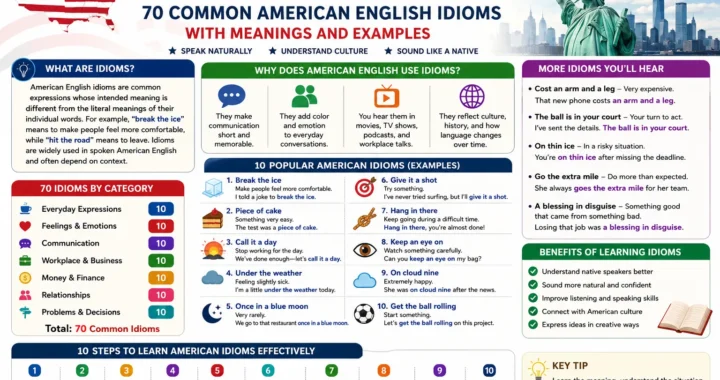
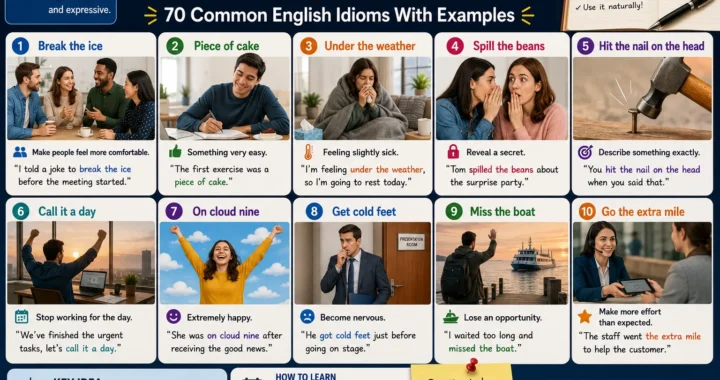

[…] Read More: What Is an Idiom? Meaning, Examples & Uses […]