


What Is an Idiom? A Simple Guide to Meaning, Examples, and Everyday Use
You’ve probably said “it’s raining cats and dogs” without ever picturing actual animals falling from the sky. That’s the strange magic of idioms. They’re phrases everyone understands, yet they make no literal sense at all. If you’ve ever wondered about idiom definition and why English is full of these odd expressions, you’re about to get a clear, simple answer.
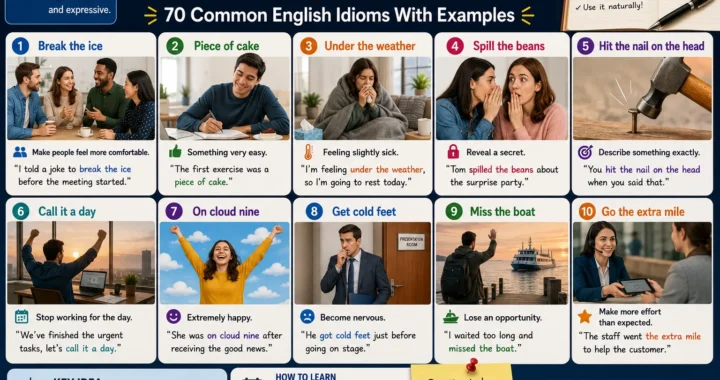
Idioms show up in daily conversations, movies, books, and even business meetings. Native speakers use them without thinking twice. But for anyone learning English, or even native speakers who want to understand language better, idioms can feel confusing at first. Why does “break a leg” mean good luck instead of an injury? Why does “spill the beans” have nothing to do with cooking?
Understanding idioms isn’t just about memorizing phrases. It’s about understanding how language grows, how culture shapes communication, and how meaning can shift far from the actual words used. Once you understand the logic behind idioms, they become much easier to recognize, remember, and use correctly.
This article breaks down what idioms really are, how they work, why they matter, and how you can start using them naturally and confidently.
Idiom Definition: The Simple Answer
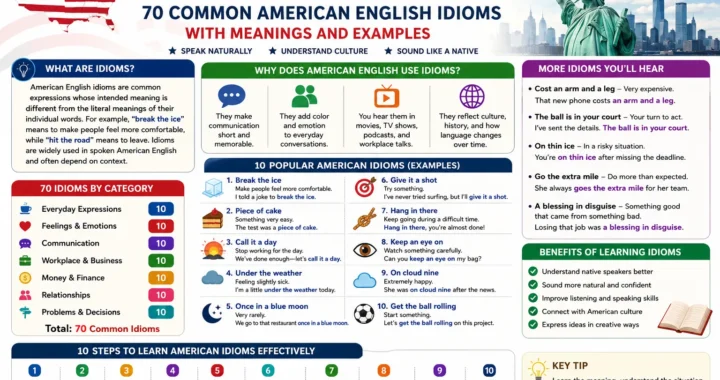
An idiom is a phrase or expression whose meaning cannot be understood from the individual words alone. The words come together to create a completely different meaning, one that native speakers learn through cultural use rather than logic. For example, “under the weather” means feeling sick, not describing actual weather conditions.

Why Idioms Exist in Language
Every language develops shortcuts for common feelings, situations, and ideas. Idioms are one of those shortcuts.
Instead of saying “I am extremely tired,” someone might say “I’m dead on my feet.” The idiom carries emotional weight and color that a plain sentence often lacks.
Idioms also connect people. When two people understand the same idiom, they share a piece of cultural knowledge. This creates a sense of familiarity, even between strangers.
Many idioms come from history, old professions, sailing traditions, farming life, or even sports. Over time, the original context fades, but the phrase survives.
[Internal Link: Related Article] on the history of common English phrases can help readers who want a deeper look into where idioms come from.
Idioms also make communication more natural. Removing them from a conversation would make speech sound stiff and overly formal.
How Idioms Differ From Other Expressions
People often confuse idioms with other figures of speech like similes, metaphors, or proverbs. Understanding the differences makes idioms easier to recognize.
Idioms vs. Metaphors
A metaphor compares two things directly, such as “time is money.” An idiom, on the other hand, has a fixed meaning that doesn’t change based on comparison. “Time is money” is fairly easy to interpret. “Kick the bucket” is not, unless you already know it means to die.
Idioms vs. Proverbs
Proverbs usually offer advice or a life lesson, such as “the early bird catches the worm.” Idioms don’t always teach a lesson. Some simply describe a situation, like “on the fence,” which means being undecided.
Idioms vs. Slang
Slang changes quickly and often applies to specific groups or age ranges. Idioms tend to last for generations and appear across formal and informal contexts alike.
Common Types of Idioms You Should Know
Idioms generally fall into a few recognizable categories. Knowing these categories can help you spot new idioms even if you’ve never heard them before.
- Emotion-based idioms – “over the moon,” “down in the dumps”
- Action-based idioms – “hit the books,” “bite the bullet”
- Comparison idioms – “as busy as a bee,” “as clear as day”
- Body-part idioms – “cost an arm and a leg,” “keep an eye on”
- Animal idioms – “let the cat out of the bag,” “hold your horses”
Recognizing these patterns makes it easier to guess the general tone of an idiom, even before knowing its exact meaning.
Expert Insights: Why Idioms Are Hard to Translate
One reason idioms confuse language learners is that they rarely translate well. If you translate “break the ice” word-for-word into another language, it often makes no sense.
This happens because idioms are rooted in cultural experience, not literal meaning. A phrase tied to farming traditions in one country might not exist in a country with a different history.
Language teachers often note that idiom fluency is one of the last skills learners develop, even after grammar and vocabulary feel comfortable. This is because idioms require exposure, not just study. You learn them by hearing them used repeatedly in real conversations, not by memorizing lists.
This is also why idioms are a strong indicator of fluency. Using them naturally, and at the right moment, signals a deep comfort with the language.
Common Mistakes People Make With Idioms
Mistake 1: Taking idioms literally
Many learners try to picture the literal meaning, which leads to confusion. The fix is to treat idioms as single units of meaning, not word-by-word puzzles.
Mistake 2: Using idioms in the wrong context
Some idioms are casual, while others sound outdated or overly formal. Using “kick the bucket” in a formal condolence message would sound inappropriate. Always match the idiom’s tone to the situation.
Mistake 3: Mixing up similar idioms
Phrases like “once in a blue moon” and “every now and then” have similar meanings but different intensities. Learning subtle differences prevents miscommunication.
Mistake 4: Overusing idioms
Using too many idioms in one conversation can sound unnatural, even to native speakers. Idioms work best when used sparingly and naturally.
Mistake 5: Assuming idioms are universal
Many people assume idioms translate across cultures. In reality, most idioms are specific to a single language or region.
Practical Steps to Understand and Use Idioms Correctly
- Learn idioms in context, not as isolated definitions. Read or listen to how they’re used in real sentences.
- Group similar idioms together by theme, such as emotions or time, to make memorization easier.
- Practice using one new idiom per day in a sentence you create yourself.
- Listen for idioms in movies, podcasts, or conversations, and pause to note how they’re used.
- Avoid direct translation from your native language, since idioms rarely match word-for-word.
- Ask native speakers for clarification when an idiom’s tone or context feels unclear.
- Review idioms regularly so they move from short-term memory into natural use.
When and Where Idioms Are Commonly Used
Idioms appear across many settings, though their formality can shift depending on the situation.
| Setting | Common Idiom Use | Example |
|---|---|---|
| Everyday conversation | Very frequent | “It’s a piece of cake.” |
| Business meetings | Moderate, often professional idioms | “Let’s touch base later.” |
| Formal writing | Rare, avoided in academic papers | Typically avoided |
| Creative writing | Frequent, adds personality | “Her heart sank.” |
This table shows why context matters. The same idiom that works perfectly in casual conversation might feel out of place in a formal report.
Frequently Asked Questions
Q: What is the simplest definition of an idiom?
A: An idiom is a phrase whose meaning differs from the literal meaning of its individual words. People understand it through common usage rather than logic. For example, “spill the beans” means to reveal a secret, not to drop actual beans.
Q: Are idioms the same in every English-speaking country?
A: No. Idioms often vary by region. British English, American English, and Australian English each have idioms unique to their culture, even though they share the same language.
Q: Why are idioms important in English?
A: Idioms make speech sound natural and expressive. Native speakers use them constantly, so understanding idioms helps learners follow conversations, media, and everyday communication more easily.
Q: How can I remember idioms more easily?
A: Learning idioms through real sentences, stories, or conversations works better than memorizing lists. Associating an idiom with a specific situation makes it easier to recall later.
Q: Can idioms be used in formal writing?
A: Generally, idioms are avoided in academic or highly formal writing. They fit better in conversational, creative, or informal business contexts.
Q: What’s the difference between an idiom and a phrase?
A: A regular phrase has a literal meaning, while an idiom’s meaning is different from its individual words. “Open the door” is literal, but “open a can of worms” is idiomatic.
Q: Do idioms change over time?
A: Yes. Some idioms fade out of use, while new ones emerge based on culture, technology, or trends. Language constantly evolves, and idioms evolve with it.
Q: Is it okay to create my own idioms?
A: New idioms do form naturally over time, usually through repeated cultural use. However, made-up idioms may confuse others unless they become widely recognized and understood.
Bringing It All Together
Idioms give language personality, color, and emotional depth that literal words often can’t capture. They reflect culture, history, and shared experience, which is why they can feel confusing at first but become second nature with practice.
Understanding idiom definition is only the starting point. Real fluency comes from noticing idioms in daily life, practicing them in real sentences, and paying attention to context and tone.
The more you expose yourself to natural conversations, shows, books, and real interactions, the more idioms will start to feel familiar rather than confusing. Instead of trying to memorize hundreds of phrases at once, focus on a few at a time and use them intentionally.
Language grows through use, not just study. The next time you hear an unfamiliar idiom, pause, ask what it means, and add it to your own vocabulary. Over time, these small moments build real, lasting fluency, one phrase at a time.


[…] Read More: Idiom Definition: Meaning, Examples & Usage […]