


An American says something is “a slam dunk,” while a British speaker might describe the same easy win as “a doddle.” Both are English idioms, both mean roughly the same thing, and neither would make immediate sense to someone from the other country.
This regional variation is one of the most overlooked parts of learning English idioms. Textbooks often present idioms as one universal set, when in reality, American, British, Australian, and Canadian English each carry their own idiomatic flavor.
For learners, this creates a real challenge. You might master a solid list of idioms, only to travel or watch media from a different English-speaking country and find yourself confused all over again by unfamiliar phrases.
Understanding how English idioms shift by region, and why some idioms travel well while others stay local, makes the entire learning process far less frustrating and far more realistic.
By the end of this piece, you’ll understand how English idioms vary across major dialects, which ones are safe to use anywhere, and how to avoid common mix-ups tied to regional differences.
What Are English Idioms, Exactly?
English idioms are fixed expressions used across English-speaking countries whose meaning cannot be understood from the individual words alone. While some idioms are universal, many vary by region, reflecting local history, culture, and everyday speech patterns. For example, “piece of cake” is understood almost everywhere, while “cheap as chips” is mostly British.

Idioms That Work Across Nearly All English-Speaking Regions
Some idioms have spread so widely through media, trade, and travel that they’re understood almost everywhere English is spoken.
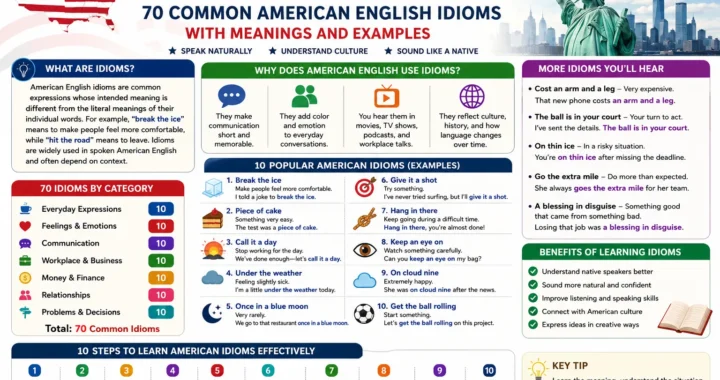
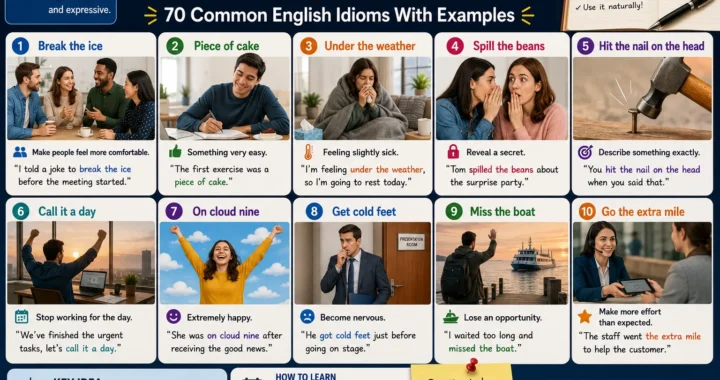
- “Break the ice” – To ease tension in a social situation.
- “Piece of cake” – Something very easy.
- “Under the weather” – Feeling sick.
- “Once in a blue moon” – Something that happens rarely.
- “Spill the beans” – To reveal a secret.
These idioms are generally safe to use with any English speaker, regardless of where they’re from, making them a reliable starting point for learners.
Idioms Common in American English
American English has its own set of idioms that don’t always translate cleanly to British or Australian ears.
- “Ballpark figure” – A rough estimate.
- “Hit a home run” – To achieve great success, borrowed from baseball.
- “Monday morning quarterback” – Someone who criticizes decisions after the fact.
- “Bite the bullet” – To face something difficult after avoiding it.
Many American idioms borrow heavily from baseball and football, which explains why some feel unfamiliar to speakers in countries where those sports aren’t as popular.
Idioms Common in British English
British English carries its own distinct set of idioms, some of which sound unfamiliar or even confusing to American speakers.
- “Cheap as chips” – Very inexpensive.
- “Bob’s your uncle” – A phrase meaning “there you go” or “it’s that simple.”
- “Take the biscuit” – To be the most surprising or extreme example of something.
- “Chuffed to bits” – Extremely pleased.
These idioms often puzzle non-British speakers on first encounter, since the imagery doesn’t always translate logically.
Idioms Common in Australian English
Australian English blends familiar English idioms with its own distinct expressions, often shortened or playful in tone.
- “Flat out like a lizard drinking” – Extremely busy.
- “Not my cup of tea” – Something you don’t personally enjoy (shared with British English, but very common in Australia too).
- “She’ll be right” – Everything will be fine.
- “Give it a burl” – To give something a try.
Australian idioms tend to feel more casual and conversational, reflecting the informal tone common in everyday Australian speech.
Expert Insights: Why Regional Idioms Develop Differently
Idioms often form around activities, industries, or cultural touchpoints unique to a specific region. American idioms frequently draw from sports like baseball and football, since these games are deeply woven into everyday American culture and media.
British idioms often carry more historical or class-related roots, reflecting centuries of language evolution within a smaller, older population. Australian idioms tend to favor humor, exaggeration, and shortened phrasing, mirroring the informal, direct communication style common in Australian culture.
This is why regional idioms rarely translate well even between English-speaking countries, despite sharing the same base language. The idiom itself is tied to local experience, not just vocabulary.
For learners, recognizing which idioms are regional versus universal helps prevent confusion, especially when consuming media or communicating with people from different English-speaking countries.
Common Mistakes People Make With English Idioms
Mistake 1: Assuming all English idioms are universal
Many learners apply an idiom learned in one region globally, leading to confusion. Always consider whether a phrase is regional before assuming it’s understood everywhere.
Mistake 2: Mixing idioms from different dialects in one sentence
Combining an American idiom with British phrasing can sound inconsistent. Staying consistent with one dialect, especially in writing, keeps communication clearer.
Mistake 3: Translating idioms literally between English dialects
Even within English, literal interpretation often fails. “Bob’s your uncle” makes no logical sense translated word for word, even to other English speakers unfamiliar with British phrasing.
Mistake 4: Ignoring context clues in unfamiliar idioms
Surrounding sentences often reveal an idiom’s meaning, even without prior knowledge. Reading for context helps bridge regional gaps in understanding.
Practical Steps to Learn English Idioms Across Regions
- Start with universal idioms that work across most English-speaking countries before branching into regional phrases.
- Identify which dialect matters most to you, based on where you plan to live, work, or travel.
- Watch media from different English-speaking regions to notice how idioms vary naturally in real use.
- Keep a running list separated by region, rather than mixing all idioms together.
- Ask native speakers directly when an idiom’s regional origin feels unclear.
- Practice recognizing context clues, since they often reveal meaning even for unfamiliar regional idioms.
English Idioms by Region: Quick Comparison
| Region | Example Idiom | Meaning |
|---|---|---|
| Universal | Piece of cake | Very easy |
| American | Ballpark figure | A rough estimate |
| British | Bob’s your uncle | There you go, simple as that |
| Australian | She’ll be right | Everything will be fine |
This table offers a quick way to see how the same general concepts get expressed differently depending on the region.
Frequently Asked Questions
Q: Are all English idioms understood in every English-speaking country?
A: No. While some idioms are widely recognized everywhere, many are specific to American, British, or Australian English, and may confuse speakers unfamiliar with that particular dialect.
Q: Why do American and British English have different idioms?
A: Idioms often reflect local culture, history, and popular activities. American idioms frequently draw from sports like baseball, while British idioms often carry older historical or class-related roots.
Q: Which English idioms are safest to use internationally?
A: Idioms like “break the ice,” “piece of cake,” and “once in a blue moon” are widely understood across most English-speaking countries, making them reliable choices for international communication.
Q: Do Australian idioms differ significantly from British idioms?
A: Yes, in some cases. While Australian English shares roots with British English, it has developed its own casual, often humorous idioms, like “flat out like a lizard drinking,” not commonly used in Britain.
Q: How can I tell if an idiom is regional or universal?
A: If a native speaker from a different English-speaking country looks confused when you use it, it’s likely regional. Checking with speakers from multiple regions helps confirm which idioms travel well.
Q: Should I focus on one region’s idioms or learn a mix?
A: It depends on your goals. If you’re focused on one country specifically, prioritize that region’s idioms. For general fluency, starting with universal idioms first offers the most practical value.
Q: Do English idioms change over time within each region?
A: Yes. Idioms evolve continuously within each dialect, influenced by media, technology, and shifting cultural trends, meaning some regional idioms fade while new ones emerge.
Bringing It All Together
English idioms aren’t one single, universal set of phrases. They shift and vary depending on whether you’re listening to American, British, or Australian English, each shaped by its own culture and history.
Recognizing this variation removes a lot of unnecessary confusion, especially for learners who assumed idioms worked the same way everywhere English is spoken.
Start with idioms that travel well across regions, then branch into dialect-specific phrases based on where you’re headed or which media you consume most. That approach builds practical, realistic fluency.
The next time an unfamiliar English idiom catches you off guard, consider where it might be from. That question alone often unlocks the meaning faster than any dictionary could.
Read More: Popular Idioms Everyone Should Know (With Real Meanings and Examples)


[…] Read More: English Idioms: How They Differ Across Regions and Why They Trip Up Learners […]