


Someone says they’re going to “bite the bullet” and finally deal with a problem they’ve been avoiding. No teeth, no actual bullet, just a decision to face something difficult head-on. That’s the charm of popular idioms. They turn ordinary moments into something more vivid and memorable.
These widely recognized phrases show up everywhere, in conversations, movies, songs, and workplace chats. Most native speakers use them constantly without realizing how strange these expressions would sound to someone hearing them for the first time.
For anyone learning English, or simply curious about language, understanding popular idioms opens up a whole layer of communication that textbooks rarely cover in detail.
This matters because idioms aren’t optional extras. They’re a core part of how people actually speak, joke, and connect with each other in everyday situations.
By the end of this piece, you’ll recognize the most popular idioms in English, understand exactly what they mean, and know how to use them naturally in real conversations.
What Makes an Idiom Popular?
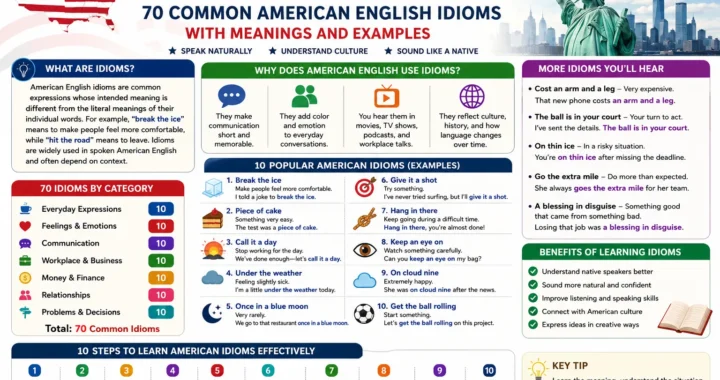
Popular idioms are widely recognized expressions used frequently across everyday conversations, media, and writing. Unlike rare or regional idioms, these phrases are understood by most English speakers regardless of location. For example, “break the ice” is instantly recognized as meaning to ease social tension, not to physically break ice.

Popular Idioms About Everyday Situations
Some idioms are so common that they’ve become part of ordinary, everyday speech.
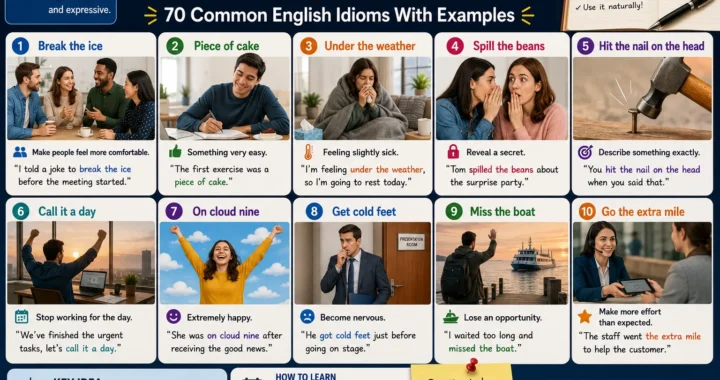
- “Piece of cake” – Something very easy to do.
- “Break the ice” – To ease tension in an awkward or new social situation.
- “Hit the sack” – To go to sleep.
- “Spill the beans” – To reveal a secret, often accidentally.
- “Call it a night” – To stop an activity and go to bed.
These idioms appear so often that most learners encounter them within their first few months of studying English.
Popular Idioms About Emotions
Emotional idioms let speakers express feelings with more color than plain adjectives allow.
- “Over the moon” – Extremely happy.
- “Down in the dumps” – Feeling sad or low.
- “On cloud nine” – Feeling very happy or excited.
- “Cold feet” – Feeling nervous or hesitant before doing something important.
- “Butterflies in my stomach” – Feeling nervous, often before something significant.
These idioms are especially common in personal conversations, where expressive language feels more natural than plain statements.
Popular Idioms About Time and Effort
These idioms describe how quickly, rarely, or effortfully something happens.
- “Once in a blue moon” – Something that happens very rarely.
- “In the nick of time” – Just before it’s too late.
- “Bite the bullet” – To face something difficult after avoiding it.
- “Burn the midnight oil” – To work late into the night.
These idioms add rhythm to speech, replacing plain descriptions with more memorable, vivid alternatives.
Popular Idioms About Money and Value
Money-related idioms show up frequently in casual chats, business discussions, and everyday decision-making.
- “Cost an arm and a leg” – Something very expensive.
- “Break the bank” – To spend more money than you can afford.
- “Money doesn’t grow on trees” – A reminder that money is limited.
- “Tighten your belt” – To spend less and save carefully.
Understanding these idioms helps readers follow conversations about spending, budgeting, and financial decisions more naturally.
Popular Idioms Used in the Workplace
Certain idioms appear specifically in professional settings, meetings, and business communication.
- “Touch base” – To make brief contact or follow up.
- “On the same page” – In agreement or understanding something the same way.
- “Think outside the box” – To think creatively.
- “Learn the ropes” – To learn how to do a new job or task.
These idioms tend to feel more neutral and professional compared to casual idioms like “spill the beans.”
Expert Insights: Why Some Idioms Become Popular While Others Stay Obscure
Idioms tend to become widely popular when they describe experiences shared across cultures and generations, like feeling nervous, spending money, or working hard. Phrases tied narrowly to a specific historical event or outdated technology often stay regional or fade over time.
Media plays a role too. Idioms used repeatedly in movies, television, and popular music tend to spread faster and stay in common use longer than phrases limited to written text alone.
For learners, focusing first on popular idioms offers a stronger return on effort, since these phrases appear far more often in daily conversation than rare or highly regional expressions.
This is why many language courses prioritize widely recognized idioms early, rather than introducing obscure phrases that learners are unlikely to encounter often.
Common Mistakes People Make With Popular Idioms
Mistake 1: Assuming popular idioms are universal across all English dialects
Some widely used idioms in American English differ from those common in British or Australian English. Always consider regional context.
Mistake 2: Using casual idioms in formal settings
Phrases like “spill the beans” sound too casual for professional writing. Match idiom tone to the situation.
Mistake 3: Overusing idioms in conversation
Packing too many idioms into one exchange can sound forced, even to native speakers. Idioms work best used naturally and occasionally.
Mistake 4: Confusing similar idioms
Phrases like “once in a while” and “once in a blue moon” seem alike but express different levels of rarity.
Practical Steps to Learn Popular Idioms Quickly
- Start with a short list of ten to fifteen widely used idioms rather than trying to learn everything at once.
- Group idioms by theme, such as emotions, time, or money, to make them easier to recall.
- Practice using one idiom per day in a sentence you write yourself.
- Notice idioms in movies, shows, and podcasts, paying attention to context.
- Avoid direct translation from your native language.
- Review your list weekly so idioms move from recognition into confident use.
Frequently Asked Questions
Q: What are the most popular idioms in English?
A: Widely recognized idioms include “break the ice,” “piece of cake,” “spill the beans,” and “once in a blue moon.” These phrases appear regularly in casual conversations, media, and everyday communication across most English-speaking regions.
Q: Are popular idioms the same in American and British English?
A: Not always. Some idioms, like “piece of cake,” are understood everywhere, while others, such as “cheap as chips,” are more common specifically in British English than American English.
Q: Why do certain idioms become more popular than others?
A: Idioms describing shared, universal experiences, like emotions or effort, tend to spread widely. Media exposure through movies, shows, and music also helps certain idioms stay popular across generations.
Q: Can popular idioms be used in professional settings?
A: Some, like “touch base” or “on the same page,” fit naturally into professional communication. Casual idioms like “spill the beans” are usually better suited for informal conversations.
Q: How many popular idioms should I learn first?
A: Starting with 20 to 30 widely recognized idioms tied to everyday topics gives most learners a strong, practical foundation without feeling overwhelming.
Q: Do popular idioms change over time?
A: Yes. Some idioms fade as culture shifts, while new ones emerge, often influenced by technology, media, or changes in how people communicate daily.
Q: What’s the best way to remember popular idioms?
A: Learning idioms through real sentences and context works better than memorizing isolated definitions. Seeing a phrase used naturally in conversation or media helps the meaning stick far more effectively.
Bringing It All Together
Popular idioms give everyday English its personality, humor, and emotional depth. Learning the most widely recognized ones first gives you the strongest return, since these are the phrases you’ll actually hear and use most often.
Instead of trying to memorize every idiom in the language, focus on a manageable list tied to real, common situations, emotions, time, money, and daily conversation.
Pay attention to how these phrases show up in shows, conversations, and everyday interactions. That exposure builds real understanding far faster than studying definitions alone.
The next time someone mentions “biting the bullet” or feeling “under the weather,” you won’t just understand them. You’ll be ready to use these popular idioms just as naturally yourself.
Read More: List of Idioms: Common Expressions Organized by Category for Quick Reference


[…] Read More: Popular Idioms Everyone Should Know (With Real Meanings and Examples) […]