


Idioms and Sentences: How to Blend Them Naturally Into Your Writing
A student writes an essay packed with idioms, one in nearly every sentence, hoping to sound more advanced and fluent. Instead, a teacher marks it up heavily, noting that the writing feels forced and unnatural. The problem wasn’t any single idiom. It was how densely they were packed together across so many sentences.
Understanding idioms and sentences individually is one skill. Knowing how to weave idioms naturally across multiple sentences, within a paragraph or longer piece of writing, without overloading the reader, is a genuinely different and often overlooked skill.
This matters for writers, students, and English learners trying to move past isolated example sentences toward writing that actually flows naturally across paragraphs, essays, emails, and everyday communication.
Understanding pacing, density, and placement across connected sentences, not just correct grammar within a single sentence, makes the real difference between writing that sounds fluent and writing that sounds like it’s trying too hard.
By the end of this piece, you’ll know how to naturally distribute idioms across sentences and paragraphs, avoiding the overstuffed, unnatural feeling that comes from using too many at once.
Why Sentence-Level Idiom Use Differs From Paragraph-Level Use
Using an idiom correctly within a single sentence is different from using idioms naturally across a full paragraph or piece of writing, where pacing and density matter just as much as grammatical accuracy. A single well-placed idiom can strengthen a sentence, while multiple idioms packed too closely together across several sentences often makes writing feel cluttered, unnatural, or overly casual, even when each individual idiom is technically used correctly.
How Many Idioms Is Too Many in One Paragraph
There’s no fixed rule, but a useful general guideline is limiting yourself to one, occasionally two, idioms within a single paragraph of five or six sentences, particularly in more formal or professional writing.
Casual writing, like a personal blog post or informal email, can typically support slightly more frequent idiom use without feeling overloaded, since the overall tone already leans conversational.
The key issue isn’t a strict numerical limit, but rather density relative to tone. A paragraph packed with idioms in quick succession tends to feel performative rather than genuinely natural, regardless of the specific number used.
Where to Place Idioms Within a Sentence for Natural Flow
Beyond simply including idioms, their position within a sentence affects how naturally they read.
- Idioms work well as the main point of a sentence: “The negotiations finally broke the ice after weeks of tension.” Here, the idiom carries the sentence’s central meaning.
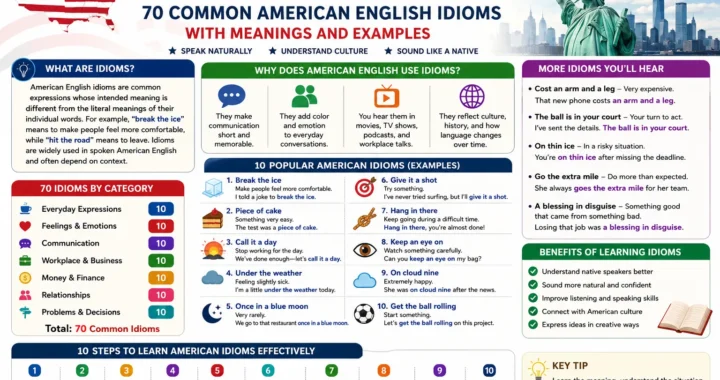
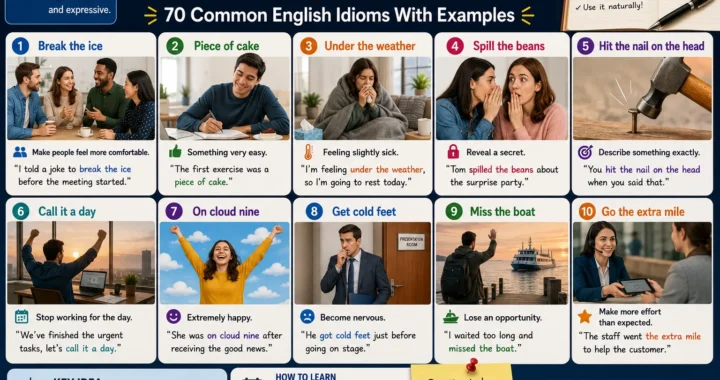
- Idioms work less naturally when crammed into subordinate clauses: “Although we were trying to break the ice, which was hard because everyone felt under the weather and things seemed like they’d cost an arm and a leg, we eventually agreed.” This sentence tries to fit too many idioms into one complex structure, reading as cluttered rather than natural.
Giving each idiom room to function as the clear focus of its own sentence, rather than crowding several together, produces noticeably more natural, readable writing.
Distributing Idioms Across a Longer Piece of Writing
For longer pieces, essays, articles, or extended emails, spacing idioms out across different sections tends to read far more naturally than clustering them all in one place.
- Opening sections: Often benefit from clear, direct language rather than idiomatic phrasing, since introductions typically prioritize clarity over stylistic flourish.
- Middle sections: Can comfortably include idioms tied to specific points or transitions, since the reader is already engaged with the content’s flow.
- Concluding sections: Sometimes benefit from a single, well-chosen idiom to reinforce a final point memorably, without overloading the ending.
This kind of intentional spacing mirrors how idioms actually appear in professionally written articles, essays, and books, rarely clustered densely, but distributed thoughtfully throughout a longer piece.
Matching Idiom Density to Writing Tone and Purpose
Different types of writing call for genuinely different idiom density, and recognizing this distinction prevents both overuse and underuse.
- Academic or formal writing: Typically uses idioms sparingly, if at all, favoring more literal, precise language throughout.
- Business or professional writing: Can include occasional, well-chosen idioms, particularly ones common in workplace contexts, like “touch base” or “on the same page.”
- Creative or conversational writing: Can support more frequent idiom use, since the tone already leans toward natural, spoken-style language.
- Casual personal communication: Often includes idioms most densely and naturally, mirroring how people actually speak in everyday conversation.
Matching your idiom density to the expected tone of your specific writing context prevents both the stiff, overly literal feeling of avoiding idioms entirely in casual writing, and the cluttered, unnatural feeling of overusing them in formal contexts.
Expert Insights: Why Overusing Idioms Signals Inexperience, Not Fluency
Counterintuitively, writers and language learners sometimes assume that using more idioms demonstrates stronger English fluency. In practice, experienced writers and editors often view idiom-dense writing as a sign of inexperience, since native speakers naturally space idioms out rather than clustering them densely.
This happens because idioms carry stylistic weight. Each one shifts the tone of a sentence noticeably, and stacking several idioms together compounds that stylistic shift until the writing starts to feel exaggerated or performative rather than natural.
Skilled writers tend to use idioms deliberately, choosing one strong, well-placed expression to anchor a specific sentence or point, rather than treating idioms as decorative language to sprinkle throughout every sentence.
This is part of why genuine fluency often shows up as restraint, knowing when an idiom adds real value to a specific sentence, and when plain, direct language actually serves the writing better.
Common Mistakes People Make With Idioms Across Sentences
Mistake 1: Packing multiple idioms into a single sentence
This creates cluttered, hard-to-follow writing, even when each individual idiom is grammatically correct on its own.
Mistake 2: Using idioms too frequently across a short paragraph
Even when each sentence contains only one idiom, using them in nearly every sentence within a short paragraph creates an overloaded, unnatural rhythm.
Mistake 3: Ignoring tone when deciding how many idioms to use
Applying casual-writing idiom density to formal or academic writing, or vice versa, creates a noticeable mismatch between content and context.
Mistake 4: Avoiding idioms entirely in casual writing
While overuse is a real problem, completely avoiding idioms in genuinely casual writing can make the tone feel unnecessarily stiff or overly formal.
Practical Steps to Blend Idioms Naturally Into Your Writing
- Limit yourself to one idiom per paragraph in most formal or professional writing contexts.
- Give each idiom its own clear sentence, rather than crowding several into one complex sentence structure.
- Space idioms out across longer pieces, rather than clustering them all in one section.
- Match idiom density to your writing’s overall tone, using more in casual writing and fewer in formal or academic contexts.
- Read your writing aloud, checking whether idiom-heavy sections feel natural or noticeably forced.
- Revise dense sections specifically, removing or spacing out idioms that feel crowded together after reviewing your draft.
Idiom Density Guide by Writing Type
| Writing Type | Typical Idiom Density | Example Context |
|---|---|---|
| Academic writing | Very low | Research papers, essays |
| Business writing | Low to moderate | Emails, reports, meetings |
| Creative writing | Moderate to high | Stories, blogs, scripts |
| Casual conversation | High | Texts, informal chats |
This table offers a quick reference for calibrating idiom density based on the type of writing you’re working on.
Frequently Asked Questions
Q: How many idioms should I use in a single paragraph?
A: A general guideline is one, occasionally two, idioms per paragraph of about five or six sentences, particularly for formal or professional writing. Casual writing can typically support slightly more without feeling overloaded.
Q: Is it wrong to use more than one idiom in a single sentence?
A: It’s not strictly wrong, but crowding multiple idioms into one sentence often makes the writing feel cluttered and unnatural, even when each individual idiom is grammatically correct.
Q: Should academic writing avoid idioms entirely?
A: Generally, yes, or use them very sparingly. Academic and formal writing typically favors precise, literal language over frequent idiomatic expressions.
Q: Why does using too many idioms make writing sound unnatural?
A: Each idiom carries stylistic weight and shifts a sentence’s tone. Stacking several together compounds this effect, making the writing feel performative or exaggerated rather than genuinely natural.
Q: Where in a sentence should an idiom typically go?
A: Idioms tend to work best as the clear focus of a sentence, rather than being crammed into a subordinate clause alongside other idioms or complex phrasing.
Q: Does idiom density change based on what I’m writing?
A: Yes, significantly. Academic writing calls for minimal idiom use, business writing supports occasional idioms, and casual or creative writing can comfortably support more frequent, natural idiom use.
Q: How can I tell if my writing has too many idioms?
A: Reading your writing aloud often reveals overloaded sections. If a paragraph feels performative, cluttered, or like it’s trying too hard to sound fluent, it likely contains too many idioms placed too closely together.
Bringing It All Together
Understanding idioms and sentences individually only gets you halfway toward natural, fluent writing. Learning to space idioms thoughtfully across paragraphs, matching density to tone, and giving each phrase room to function clearly within its own sentence makes the real difference.
Restraint, not frequency, tends to signal genuine fluency. A single, well-placed idiom often carries far more impact than several crowded together in the same short space.
The next time you’re revising a piece of writing, count your idioms per paragraph and consider their placement. That small check often reveals exactly where your writing needs more breathing room to feel genuinely natural.


[…] Read More: Idioms and Sentences: Write Naturally with Idioms […]