


Idioms Example: Find the Right Idiom for What You’re Trying to Say
Someone writing a performance review wants to describe an employee as extremely hardworking, but “hardworking” feels flat and overused. They know an idiom would sound more natural and vivid, but they can’t think of one on the spot. This happens constantly: knowing you want an idiom for a specific idea, without being able to recall the right one.
Most idiom resources work in one direction: here’s an idiom, here’s what it means. But often, the actual need runs the opposite way: you already know the concept you want to express and need an idiom example that captures it.
This matters for writers, students, and anyone drafting emails, reviews, essays, or speeches who wants to reach for the right idiom quickly, rather than scanning through long alphabetical or thematic lists hoping to stumble onto the right one.
This piece works as a reverse reference: organized by the idea or quality you’re trying to express, with a specific idiom example ready to use for each one.
What Is an “Idioms Example” Reference Used For?
An idioms example reference works in reverse from a typical idiom list, starting with a specific concept or quality you want to express, then providing the matching idiom rather than requiring you to already know the phrase. This format helps writers find the right expression quickly when they know what they want to say but can’t immediately recall the idiom that captures it.
Idiom Examples for Describing Hard Work
- Want to say someone works extremely hard? Try: “She’s been burning the midnight oil to finish the report.”
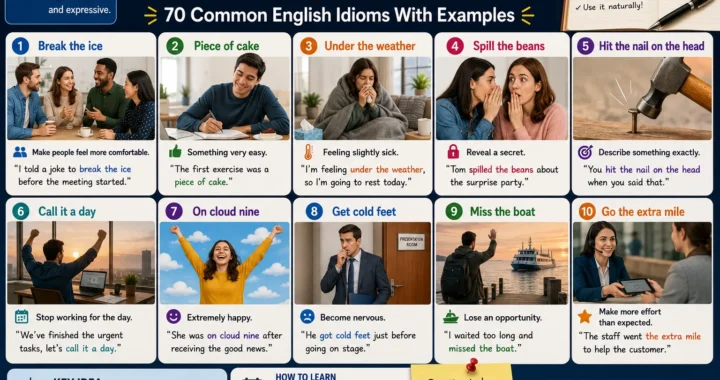
- Want to say someone gives extra effort beyond expectations? Try: “He always goes the extra mile for his clients.”
- Want to say someone works without complaint? Try: “She rolled up her sleeves and got the job done.”
- Want to say someone finally addresses a difficult task? Try: “He finally bit the bullet and scheduled the surgery.”
These idiom examples work well specifically in performance reviews, cover letters, or descriptions of effort and dedication.
Idiom Examples for Describing Difficulty or Challenges
- Want to say something is very difficult? Try: “Convincing him to change his mind was an uphill battle.”
- Want to say a situation is risky either way? Try: “We were caught between a rock and a hard place.”
- Want to say something requires facing an unavoidable consequence? Try: “Eventually, he had to face the music.”
- Want to say a problem needs to be confronted directly? Try: “It’s time to take the bull by the horns.”
These examples work well for describing obstacles, tough decisions, or challenging circumstances in both writing and conversation.
Idiom Examples for Describing Success and Ease
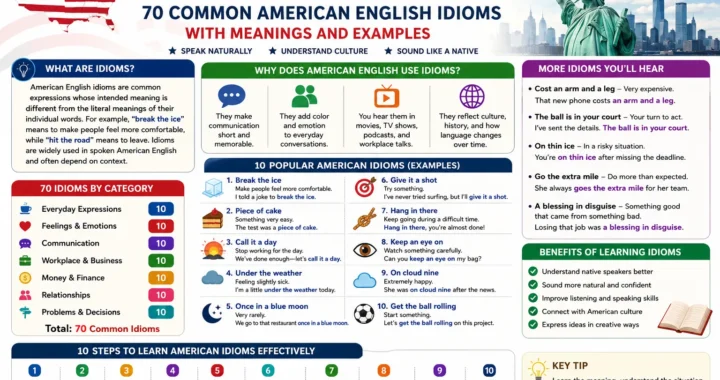
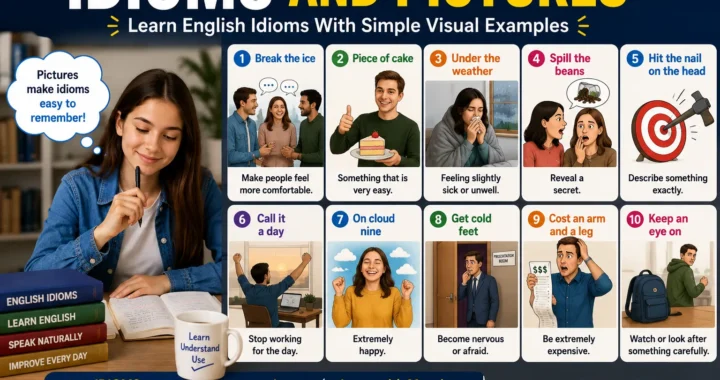
- Want to say something is very easy? Try: “The exam was a piece of cake.”
- Want to say something is certain to succeed? Try: “This new product launch is a slam dunk.”
- Want to say someone achieved great success? Try: “Her presentation really hit a home run with the board.”
- Want to say something worked out perfectly? Try: “Everything fell into place exactly as planned.”
These idiom examples work particularly well for celebrating achievements, describing positive outcomes, or writing upbeat announcements.
Idiom Examples for Describing Money and Value
- Want to say something is very expensive? Try: “That renovation cost an arm and a leg.”
- Want to say something is a good deal? Try: “At that price, it’s a steal.”
- Want to say you need to spend carefully? Try: “We’ll have to tighten our belts this quarter.”
- Want to say something has little practical impact on a larger problem? Try: “That donation is just a drop in the bucket.”
These examples fit naturally into budgeting discussions, financial reports, or everyday conversation about spending and value.
Idiom Examples for Describing Honesty and Secrets
- Want to say someone revealed a secret? Try: “He accidentally spilled the beans about the surprise.”
- Want to say someone speaks very directly? Try: “She doesn’t mince words when giving feedback.”
- Want to say the truth is finally coming out? Try: “The whole story finally came to light.”
- Want to say someone is being deliberately vague? Try: “He kept beating around the bush instead of answering directly.”
These idiom examples work well for descriptions involving communication style, honesty, or the reveal of information.
Idiom Examples for Describing Emotional States
- Want to say someone is extremely happy? Try: “She was over the moon about the acceptance letter.”
- Want to say someone is nervous? Try: “He had butterflies in his stomach before the interview.”
- Want to say someone is upset or discouraged? Try: “He’s been feeling down in the dumps lately.”
- Want to say someone is relieved after resolving something? Try: “Finishing that project was a weight off her shoulders.”
Expert Insights: Why Reverse-Lookup References Save Real Writing Time
Writers often know precisely what emotional tone or concept they want to communicate before they know the specific idiom that best captures it. A reference organized around concepts, rather than requiring the reader to already know a specific phrase, matches this natural writing process far more closely than a standard alphabetical or thematic idiom list.
This approach mirrors how experienced writers often actually work: starting with the idea, then searching for the most vivid, precise way to express it, rather than memorizing idioms in isolation and hoping to recall the right one during drafting.
For non-native English speakers specifically, this reverse-lookup format offers a genuine practical advantage, since translating a concept from their native language into English often happens before they recall the specific idiomatic phrase that fits.
This structure works especially well as a quick reference during actual writing and editing, rather than as a study tool for memorization, since it’s designed to solve the immediate “I know what I want to say but not how to say it vividly” problem.
Common Mistakes People Make Searching for the Right Idiom
Mistake 1: Choosing an idiom based on its sound rather than its precise meaning
Selecting an idiom because it sounds impressive, without confirming it actually matches your intended meaning, can lead to confusing or incorrect usage.
Mistake 2: Forcing an idiom into a context where it doesn’t quite fit
Not every concept has a perfect idiom match. Sometimes plain, direct language communicates the idea more clearly than a forced idiomatic substitute.
Mistake 3: Overlooking tone mismatches
Some idioms feel too casual for formal writing, even when their meaning technically fits the situation being described.
Mistake 4: Using an unfamiliar idiom without confirming its full meaning first
Choosing an idiom you’re not fully certain about, just because it seemed to fit, risks using it incorrectly or in a slightly wrong context.
Practical Steps to Find the Right Idiom for Your Writing
- Identify the specific concept or quality you want to express before searching for a matching idiom.
- Check that the idiom’s actual meaning fully matches your intended point, not just its general impression or sound.
- Consider your writing’s tone, choosing more formal-sounding idioms for professional writing and casual ones for informal contexts.
- Read the idiom in a full example sentence before using it, confirming it fits naturally into your specific context.
- Don’t force an idiom where plain language works better, since not every sentence benefits from figurative phrasing.
Quick Reference: Concept to Idiom Example
| I want to express… | Idiom example |
|---|---|
| Extremely hard work | “Burning the midnight oil” |
| A difficult situation | “Between a rock and a hard place” |
| Something very easy | “A piece of cake” |
| Something very expensive | “Cost an arm and a leg” |
| Revealing a secret | “Spill the beans” |
| Extreme happiness | “Over the moon” |
This table offers a fast-scan version of the concept-to-idiom matches covered throughout this piece.
Frequently Asked Questions
Q: What’s a good idiom example for describing hard work?
A: “Burning the midnight oil” works well, as in “She’s been burning the midnight oil to finish the report,” describing someone working late and diligently on a task.
Q: Is there an idiom example for something being very easy?
A: Yes, “a piece of cake” is a common choice, as in “The exam was a piece of cake,” describing a task requiring little effort or difficulty.
Q: What idiom can I use to describe a difficult decision?
A: “Caught between a rock and a hard place” works well for describing a situation with two equally difficult options, neither of which feels ideal.
Q: Is there a good idiom example for revealing a secret?
A: “Spill the beans” is the most commonly used idiom for this concept, as in “He spilled the beans about the surprise party before we were ready.”
Q: What idiom describes extreme happiness?
A: “Over the moon” works well, as in “She was over the moon about her acceptance letter,” describing intense excitement or joy about good news.
Q: How do I know if an idiom fits my specific writing context?
A: Confirm the idiom’s exact meaning matches your intended point, then check whether its tone, casual versus formal, fits your specific piece of writing before including it.
Q: Should I always use an idiom instead of plain language?
A: No. Not every sentence benefits from an idiom. If a phrase doesn’t fit naturally or you’re uncertain about its exact meaning, plain, direct language often communicates your point more clearly.
Bringing It All Together
Finding the right idioms example for a specific idea shouldn’t require scanning through long, unrelated lists hoping to stumble onto the right phrase. Working backward from the concept you want to express, toward the idiom that captures it precisely, matches how writers actually think and draft in real time.
Keep this kind of reverse reference on hand while writing, and you’ll spend less time hunting for the right words and more time actually finishing your work.
The next time you’re stuck trying to describe something vividly, think about the underlying concept first. The right idiom example is often just one clear idea away.
Read More: Idioms and Sentences: Write Naturally with Idioms

[…] Read More: Idioms Example: Find the Right Idiom Fast […]