


Idioms and Idiomatic Language: What They Mean and Why They Matter
Someone describes a plan as “a piece of cake,” and a new English learner might picture dessert instead of an easy task. That small mix-up shows exactly what makes idioms and idiomatic language so interesting, and sometimes so confusing.
Idiomatic expressions are everywhere in English. They shape how people joke, complain, encourage each other, and describe daily life. Yet many speakers use them automatically, without ever stopping to think about why the words don’t match the meaning.
Understanding idioms isn’t just useful for language learners. Writers, teachers, professionals, and even native speakers benefit from knowing how idiomatic language works, why it exists, and how to use it correctly in different situations.
Some idioms feel obvious once explained, while others seem to come out of nowhere. Knowing the difference between literal and idiomatic language can completely change how confidently someone speaks and writes English.
By the end of this piece, you’ll understand exactly what makes a phrase idiomatic, how to recognize idiomatic language in everyday speech, and how to start using idioms naturally instead of avoiding them out of confusion.
What Does Idiomatic Mean?
Idiomatic language refers to expressions whose meaning cannot be understood by looking at the individual words alone. These phrases are widely accepted by native speakers as natural, even though they don’t follow literal logic. For example, “spill the beans” doesn’t involve beans at all. It means to reveal a secret.
Image Suggestion: A simple graphic showing a spilled bag of beans next to a thought bubble representing a revealed secret, illustrating the gap between literal and idiomatic meaning.

The Difference Between Idioms and Idiomatic Expressions
People often use “idiom” and “idiomatic expression” interchangeably, but there’s a subtle difference worth understanding.
An idiom is a specific, fixed phrase with a set meaning, like “kick the bucket” or “under the weather.” These phrases rarely change their wording.
Idiomatic language is broader. It includes idioms, but also covers phrasing choices that simply sound natural to native speakers, even if the meaning isn’t hidden. Saying “make a decision” instead of “do a decision” is idiomatic, even though it isn’t technically an idiom.
This distinction matters because idiomatic correctness affects how natural someone’s English sounds, separate from whether they’re using idioms at all.
Why Idiomatic Language Feels So Natural to Native Speakers
Native speakers absorb idiomatic language through years of exposure, not through memorized rules. They hear certain word combinations repeated so often that alternative phrasing starts to sound wrong, even if it’s grammatically correct.
For example, English speakers say “strong coffee,” not “powerful coffee,” even though both words technically mean something similar. There’s no strict rule here. It’s simply what sounds right based on common usage.
This is part of why idiomatic language is difficult to teach through grammar books alone. It requires repeated listening and reading to build a natural sense of what fits.
[Internal Link: Related Article] covering common English collocations can help readers who want to explore idiomatic word pairings further.
Idiomatic fluency often separates advanced English learners from native-like speakers, even when grammar is technically correct in both cases.
Common Types of Idioms Found in Everyday English
Idioms tend to cluster around familiar themes, which makes them easier to recognize once you know the pattern.
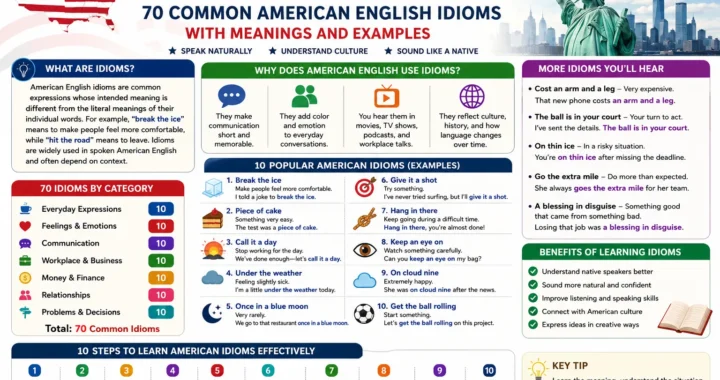
- Emotional idioms – “over the moon,” “down in the dumps”
- Time-based idioms – “once in a blue moon,” “beat the clock”
- Money-related idioms – “break the bank,” “cost a fortune”
- Body-part idioms – “keep an eye on,” “cost an arm and a leg”
- Action idioms – “hit the books,” “bite the bullet”
Recognizing these categories helps readers guess the tone of an unfamiliar idiom, even before knowing its exact meaning.
Image Suggestion: A grid-style infographic showing five idiom categories with one visual icon representing each group.
How Idiomatic Expressions Develop Over Time
Idioms usually start as literal descriptions of real activities before shifting into figurative use. Over generations, the literal meaning fades, but the phrase remains.
“Show your true colors” comes from ships displaying flags to reveal their nationality. “Bite the bullet” is linked to old medical practices used before modern anesthesia existed.
As culture changes, new idiomatic expressions form too. Some come from technology, entertainment, or shifts in daily habits, while older idioms slowly fall out of common use.
This ongoing evolution is part of why idiomatic language never feels completely fixed. It grows and shifts alongside the culture that shapes it.
Expert Insights: Why Idiomatic Fluency Takes Time to Develop
Idiomatic fluency is often one of the last language skills to fully develop, even after grammar and vocabulary feel solid. This happens because idiomatic correctness relies on pattern recognition built through repeated exposure, not memorized rules.
Language learners frequently translate idioms word for word from their first language, which usually results in phrasing that sounds unnatural or confusing to native speakers. This happens because idiomatic expressions rarely match across different languages.
The most effective way to build idiomatic fluency is through consistent exposure, listening to real conversations, reading naturally written text, and noticing repeated phrasing patterns rather than isolated definitions.
This is also why idiomatic language is considered a strong marker of fluency. Using it accurately signals deep familiarity with how a language is actually spoken, not just how it’s structured on paper.
Image Suggestion: A language learner listening to a podcast with headphones while taking notes, representing real-world idiomatic exposure.
Common Mistakes People Make With Idiomatic Language
Mistake 1: Translating idioms directly from another language
This often creates phrasing that makes no sense to native speakers. The fix is learning idioms as complete units, not translating them piece by piece.
Mistake 2: Assuming idiomatic language only means idioms
Idiomatic correctness also includes natural word pairings and common phrasing choices, not just fixed idiomatic expressions. Both areas need attention.
Mistake 3: Using idioms in the wrong tone or setting
Some idiomatic expressions feel casual, while others sound outdated or dramatic. Matching tone to context prevents awkward phrasing.
Mistake 4: Overusing idioms in a single conversation
Packing too many idioms together can sound forced, even to native speakers. Idiomatic language works best used naturally and sparingly.
Mistake 5: Believing idiomatic expressions are universal
Most idiomatic phrases are specific to a particular language or region, and rarely translate directly into another one.
Practical Steps to Build Idiomatic Fluency
- Read and listen to real content regularly, such as podcasts, interviews, and everyday conversations.
- Notice repeated phrasing patterns, not just individual idioms, since idiomatic correctness includes natural word pairings too.
- Avoid direct translation from your first language when forming sentences.
- Practice using one idiomatic expression per day in a sentence you write yourself.
- Pay attention to tone and context, matching casual idioms to casual situations.
- Ask native speakers for feedback when a phrase feels unclear or awkward.
- Review idiomatic expressions regularly so they shift from passive recognition into confident, active use.
Image Suggestion: A person practicing English conversation with a native speaker, both smiling during a casual discussion.
Frequently Asked Questions
Q: What does idiomatic mean in simple terms?
A: Idiomatic means language that sounds natural to native speakers, including expressions whose meaning differs from their individual words. It also includes phrasing choices that simply sound right based on common usage, even without hidden meaning.
Q: Is every idiom idiomatic language?
A: Yes, all idioms are idiomatic, but not all idiomatic language is made up of idioms. Idiomatic language also includes natural word pairings, like saying “make a decision” instead of “do a decision.”
Q: Why is idiomatic language hard to learn?
A: It relies on repeated exposure rather than fixed grammar rules. Learners often need to hear or read phrases many times in real context before the correct usage feels natural.
Q: Can idiomatic expressions change over time?
A: Yes. Some idioms fade out of use, while new idiomatic expressions form based on cultural shifts, technology, or changes in how people communicate daily.
Q: Do idiomatic expressions exist in every language?
A: Yes, most languages have their own idiomatic expressions, though they rarely translate directly from one language to another. Each language develops idioms shaped by its own culture and history.
Q: How can I sound more idiomatic in English?
A: Regular exposure to real conversations, shows, and reading material helps far more than memorizing idiom lists. Noticing natural phrasing patterns over time builds authentic idiomatic fluency.
Q: Should idiomatic language be used in formal writing?
A: Idioms are usually avoided in formal or academic writing, but idiomatic correctness, meaning natural phrasing, is still important. Formal writing should still sound fluent, just without casual idioms.
Q: What’s the fastest way to learn idiomatic expressions?
A: There’s no true shortcut, but consistent exposure through real conversations and media speeds up the process significantly. Learning idioms in context works far better than memorizing isolated definitions.
Bringing It All Together
Idioms and idiomatic language give English its natural rhythm, personality, and cultural depth. They can feel confusing at first, but they follow patterns that become easier to recognize with consistent exposure.
Understanding the difference between idioms and broader idiomatic phrasing helps learners focus on what actually builds fluency, not just memorization. Real progress comes from noticing how language is used in real situations, not from studying isolated rules.
Instead of trying to master every idiom at once, focus on a few at a time and pay attention to how native speakers naturally phrase their thoughts. Idiomatic fluency builds gradually, through consistent, real exposure.
The next time an unfamiliar expression catches your attention, pause and notice how it’s used. That small habit builds real, lasting fluency, one phrase at a time.
Read More: Idiom Meaning Explained with Easy Examples



[…] Read More: Idioms and Idiomatic Language Explained Simply […]